Tuesday, April 24

why can I eat cheese but not milk?


Lactose intolerance is very common.  In fact, 75% of the people world-wide have some degree of it.  However, as you may have noticed, some ethnic groups (Asians, African Americans, Native Americans, Ashkenazi Jews, and Latinos) are especially prone to it. Other risk factors include increased aging, premature birth, certain diseases affecting the small intestine (including bacterial overgrowth, celiac disease and Crohn's disease), and some cancer treatments. Lactose intolerance may also be a result of genetics (you are born without the lactase enzyme or born with an ineffective gene that has trouble producing the enzyme in sufficient quantities) or infections that injure the small intestine.
Lactose intolerance prevalence around the world


If you don't have lactose intolerance, let me tell you a little about what you are missing.  Lactose intolerance is essentially a condition that is characterized by the inability to digest the lactose in milk products (lactose is the sugar component of milk).  The symptoms of this include abdominal discomfort and other bowel related issues. (You do not want to sit on a plane next to someone who is lactose intolerant and just drank a few cups of milk!) Lactose intolerance is rarely serious, but can cause much discomfort.

The cause of lactose intolerance is the reduction or loss of lactase (the enzyme that is used to breakdown the lactose sugar into its subunits of glucose and galactose).  The unhydrolyzed lactose sugar remains in the gut and draws water to it (via osmosis) causing liquidy fecal contents to go through your system. (EW!) Additionally, the colonic bacteria naturally in your intestines ferment some of the remaining lactose, which leads to short chain fatty acid, carbon dioxide and hydrogen gas production that builds up and eventually needs to be released.

So, why can some dairy products be consumed more easily (and pain free) than others? 

Wednesday, April 18

thoughts about organics...

It has come to my attention that I've been slacking on my postings... for that I'm sorry.  It's been quite a busy semester.

Recently, we were asked to debate the pros and cons of organic farming.  I, as it turned out, was assigned to the con-side.  At first this seemed difficult because there really are many upsides to organic farming.  For one thing, organic farming tends to be more sustainable.  Organic farming uses natural fertilizers to promote the health of the soil, uses crop rotation, and limits the use of antibiotics, hormones, and genetically modified organisms (GMOs). This, arguably, reduces the impact on the environment and promotes a more nutritious product.  (There are less contaminants running from the soil into the water supply, contaminating other crops, and getting into the actual product).

Read more about organic farming.

However, as I found in my research, many organic practices have hidden costs.  It is more expensive for the farmer, consumer, and can negatively impact the environment.  Organic produce is, on average, 20% more than conventional produce (and can be up to 50% more).  With 48% of the population living on $2 a day, and about 13% living below the poverty line- does it make sense for everyone to buy organic?  There is an argument that organic produce is more nutritious than conventional; therefore, you are actually getting more for the increased price in terms of vitamins/minerals. However, there are studies that prove this, and studies that say that both products are equally nutritious.  I don't know what the answer really is!  But, sustainability and access to food is an important issue that is sometimes overlooked.  If food is too expensive, can we really ask/hope people buy it- even if it is "healthier"?

Monday, February 13

post workout: drink your chocolate milk

Last weekend, I went to a conference where Felicia Stoler presented information about nutrition and exercise and what helps athletes perform at their best.

She gave some great advice.  These are some notes that I took that I found interesting.

1) Eat before a workout- food provides your body with necessary stores of energy (glucose) to perform optimally.  Within an hour before- only drink liquids or semi-liquids, look at my previous post for ideas.  Additionally, make sure that what you are eating/drinking within the two hours before a workout is low fat (fat slows down digestion- making you feel full- but also causes food to remain in your stomach for a while).  If you workout right when you wake up- consider drinking a glass of juice.  It will provide the sugars that will help you to perform during your workout.

Sports Beans
2) Keep a food/workout journal.  Write what you eat before you work out, and write how it made you feel (energy, cramps, nausea).  Everyone is unique and metabolizes differently, so what works for one person may not work for another.  It is important to figure out what makes your body function at its best and writing this down helps you to remember and see trends.

3) Before a long race- eat jelly beans!  (In all seriousness- foods made of simple sugars, like jelly beans, will give you a boost of energy without a lot of volume in your stomach.  Find something that works for you- some people like pretzels if they crave more savory things).

4) Don't take sleep for granted when on an exercise regiment. Sleep helps you recover from strenuous workouts.

5) Protein supplementation is not necessary.  Generally, people get enough protein in their diet without needing that extra protein shake.  Instead- drink a glass of chocolate milk to rehydrate, rebuild, and refuel.

There is something special about chocolate milk, take it from Michael Phelps*.  Chocolate milk (and milk in general) is an ideal mix of carbs, fat and protein to help your body rebuild muscle, reduce post-workout soreness, and ultimately recover faster!


Thursday, February 9

When snacking- all nuts are not created equal

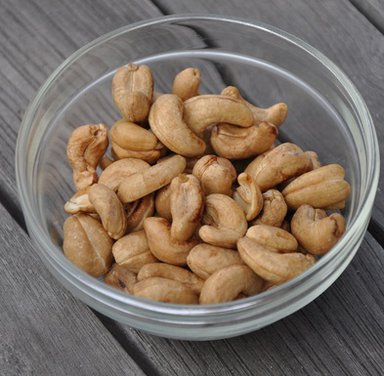
There are many recipes for homemade roasted nuts
Nuts are a great choice for a quick, nutritious snack.  They provide many nutrients like minerals, fiber, protein, and essential fatty acids (think good, unsaturated fat).  Yet- some nuts are more nutritious than others- providing more bang for you buck, so to speak (more nutrients per calorie or per gram of fat).

But- always keep in mind that high fat products are high in calories!!

When snacking on nuts- take into account calories, protein, fiber and minerals.  You can use the chart below to compare:
1) similar calorie content (ex. walnuts give you more than twice the protein that pecans do for the same calories)
or
2) similar protein content (ex. walnuts have less calories and fat compared to the macadamia nut for the same amount of protein)

Nutritional composition of 1 cup of various nut varieties- 1 serving is usually 1/4 cup*

*Peanuts are not truly a nut- they are considered a legume.  But, for our purposes- they are included in this.

Nuts are one way of lowering risk of heart disease by providing monounsaturated fats
The key to nutritionally dense foods is portion control.  A quick/handy measure of a serving of nuts is the amount that fit (in a single layer) on the palm of your hand.

Take home message: 
-Choose your nuts wisely as some  may be much higher in fat or calories than another.
-Nuts should be MINDFULLY eaten (not straight out of the can!)- measure out a portion because, although nutritious, these are very high in fat and calories.

For more nut (or any!) comparisons- look to the USDA food composition website!

Source for table:
Murano, Peter S. "Chapter 2- Food Categories and Composition." Understanding Food Science and Technology. Belmont, CA: Thomson/Wadsworth, 2003. p35. Print.