Wednesday, February 12

Skip the sugar… make these Skinny Zucchini Banana Chocolate Chip Muffins

Related to my blog post yesterday… I was in the mood for a sweet treat. I looked at what I had in my kitchen, and staring at me were perfectly ripe (…maybe almost toooo ripe) bananas. Meanwhile, I had a few zucchinis out that I was planning to use for dinner. My sweet tooth took over and I decided to make these fabulous Skinny Zucchini Banana Chocolate Chip Muffins adapted from this recipe.

More than just satisfying my sweet tooth-- these yummy muffins are portion controlled and can freeze well. When you make them… make sure not to eat them all at one time. Leave out a few (they always taste better fresh…) and put the rest away in an air-tight container. (Out of sight) In my case… I gave them to my husband to bring to his office as his mid-afternoon snack (instead of the cookies and cakes normally found in his office pantry).


In my excitement of eating these muffins, I did not photograph them. Imagine that these are what they looked like! Seriously… they were pretty close ;)


Tuesday, February 11

Sugars: exposed

Sugar is confusing-- there are so many types and so much marketing for those types. It is naturally found in fruits, dairy, and some vegetables/grains-- which are part of a healthy diet-- but it often gets a bad rap!! 
Types of sugar
The controversy stems from the fact that the majority of the intake in the American diet is not from these natural sugars but from “added sugars.”  These are sugars that are added to foods during processing, preparation, or upon consumption to sweeten the flavor of food and drink. They may be also added to foods to help with preservation, texture, body, and appearance. There are many kinds of added sugars, including white sugar, brown sugar, corn sugar, honey, syrup, and current studies indicate that these typically make up about 15-20% of a person’s total caloric intake! Because of this high intake, recent government guidelines, as well as those from the American Diabetic Association  (ADA), the American Heart Association (AHA), and numerous other agencies, have called to reduce intake of added sugars.

These days, there are many kinds of sugars, and it is important to know the difference between them-- especially because the nutrient label does not distinguish between added sugar and natural sugar (read more: Marion Nestle's Food Politics blog post). 

Here is a simple breakdown of common sugars:


Friday, February 7

Will you, Dark Chocolate, Be my Valentine?

February, though the shortest month of the year, poses unique challenges to the healthy eater. After the joyousness of the end-of-year holiday season, many take January to recover, get back on track with eating and health goals, and re-motivate themselves to reach goals. However, when February comes, some of those health goals may have fallen wayside to old habits of comfort food or quick fixes—especially when it’s too frigid to go outside to the supermarket or even the gym. Those Valentine’s candy bowls are looking especially tempting. However, fear not—here are some ways to overcome these challenges.
Research shows that clear candy bowls can increase snacking

Challenge #1: The candy bowl.  It’s 3:30 PM and the candy bowl is just calling your name, right? A way to avoid high-sugar binges— that result in the 4:30PM crash and ultimate desire for more sugar— is to re-route your path in the office to avoid walking by the candy or remove the bowl from direct eyesight on your desk. Not seeing the temptation will reduce your unconscious picking— when the “it’s just one” turns into a garbage back full of wrappers.

Out of sight, out of mind not working? Try swapping sugar-rich candy with dark chocolate pieces. Dark chocolate (60% or greater in cocoa content) has been linked with many health benefits such as stress and fatigue reduction, mood improvement, and cardiovascular improvements. Dark chocolate, compared with white or milk chocolate, contains cocoa solids that are loaded with antioxidants called flavonols and polyphenols. Though the mechanism is not completely understood, these antioxidants, as well as the monounsaturated oleic acid from the cocoa butter, can protect your heart by reducing inflammation, decreasing blood pressure, and improving blood vessel health. Studies have also linked dark chocolate intake with increasing insulin sensitivity and a reducedrisk of stroke. Despite these health benefits, do not throw caution to the wind and eat uncontrollably—dark chocolate is still a dessert.


Dark Chocolate
For more information about chocolate, look here for its history and science. 

Challenge #2: Portion control.

Monday, February 3

Quinoa cakes… so yummy even the haters will snack!

Raw quinoa
By now, I’m sure you’ve heard of quinoa, even tasted it, and probably now how to pronounce it (“keen-wah”). For the last few years, it was all the rage.  In fact—2013 was deemed “The International Year of Quinoa.”

Quinoa is a gluten-free grain that is considered a “pseudo-cereal.” It’s actually from the same family of food as spinach, beets, and swiss chard—that surprised me, too! However, we consume it like a cereal grain; therefore, it is grouped with wheat, oats, barely, etc. It comes in a rainbow of colors, but the taste and nutrient profile is similar between them. (One of the differences that is important to me is that white quinoa has a fluffier feel, and black quinoa has a crunchier feel.) Quinoa can be cooked on its own (think, rice-substitute!), used as flour in recipes, or used as flakes (to replace typical oats).

Quinoa is nutrient rich—at 110 calories per half cup—it is loaded with vitamins, minerals, fiber, antioxidants, phytonutrients—all of which are very bioavailable (our bodies absorb and reap the benefits). It is high in essential amino acids (the important building blocks of protein). Unlike most grains that lack adequate amounts of amino acids (such as like lysine and isoleucine), quinoa is uniquely rich in these, making it considered a complete protein source (like animal protein). Quinoa is also rich in healthy, monounsaturated fats. Though this does increase its caloric profile, the fat is monounsaturated (healthy)—which is one of the reasons it is linked with reduced inflammation. Other research has linked quinoa with cardiovascular health and diabetes risk reduction.

Whether you eat it because it’s healthy, because you like the taste and texture, or just because someone cooks it for you—keep eating it! If you are looking to try a new recipe—I made these quinoa cakes this past weekend that were fabulous!


Thursday, January 30

Food spotlight: the Pomegranate

Pomegranates, native to the Himalayas, are a somewhat mysterious fruit that has been enjoyed all over the world for centuries. Some scholars suggest that it was the pomegranate, not than the apple, that was the forbidden fruit Even ate in the Garden of Eden.

The fruit itself has red skin with a distinctive “crown” and loaded with clusters of red, sweet, juicy arils (seeds covered in flesh). It is the arils that are eaten whole or pressed for their juices. The seeds have also been pressed to make a rich, red dye. Pomegranate seeds can be added to smoothies, puddings, salads, dressings and marinades, side dishes (like Brussel sprouts!), or even ice cream.


Pomegranates are popular not only for their sweet taste but for their healthy nutrient profile and subsequent health benefits. They are low in calories, have no fat, and are loaded with vitamin C, vitamin K, potassium, copper, zinc, iron, fiber, antioxidants and polyphenols. Pomegranates may be protective because of their ability to limit oxidative stress and lipid peroxidation, a key step in the promotion of cancer and other chronic disease. In a recent review, pomegranates have been positively linked with anti-diabetic activity as a result of these protective mechanisms. Pomegranate consumption has been also linked with cardiovascular health by improving blood flow and decreasing LDL (“bad”) cholesterol formation, and with the slowing of prostate cancer advancement. More research, however, is needed to confirm these protective links.


For dessert or for your special valentine try making this antioxidant loaded Dark Chocolate and Pomegranate Bark from the New York Times.

Wednesday, January 23

Choosing the right oils, solved!


5 standout cooking oils!
The truth is our bodies need a variety of natural fats for good health! Healthy fats are important for brain development, supply antioxidants like vitamin E, and add flavor and richness to food. However, different oils serve different purposes, and understanding them can be complicated. There are three areas you should pay attention when choosing oils. The first is the type of fat in the oil; the second is the processing or refining of the oil; and the third is the stability and heat-sensitivity of the oil.


1) All oils contain three types of fats in varying ratios: saturated, polyunsaturated, and monounsaturated. Monounsaturated and polyunsaturated fats are the “healthiest” because they can help lower bad cholesterol and reduce your risk for heart disease. These healthy proprieties are a result of the chemical structure of the oil. Monounsaturated fats are found in oils (olive, peanut, canola, avocado), nuts and seeds. Polyunsaturated fats are also found in nuts and seeds, but they are also found in many vegetable oils (grapeseed, safflower, corn, sunflower, soy, cottonseed), and fatty fish. Polyunsaturated fats have the additional property of containing linoleic (omega-6) and alpha-linolenic acid (omega-3) essential fatty acids that the body cannot produced.


solid v. liquid fat
Saturated fats, on the other hand, increase your risk for chronic diseases, like heart disease, because they can increase your bad cholesterol. These are found in high ratios in animal fats, like butter and cheese, and other solid fats like coconut and palm oil. A trick to remembering this is look at the fat at room temperature. If it’s a liquid, then it’s probably high in mono- and polyunsaturated fats; if it’s a solid (think butter!) then it’s higher in saturated fats.


Tuesday, April 24

why can I eat cheese but not milk?


Lactose intolerance is very common.  In fact, 75% of the people world-wide have some degree of it.  However, as you may have noticed, some ethnic groups (Asians, African Americans, Native Americans, Ashkenazi Jews, and Latinos) are especially prone to it. Other risk factors include increased aging, premature birth, certain diseases affecting the small intestine (including bacterial overgrowth, celiac disease and Crohn's disease), and some cancer treatments. Lactose intolerance may also be a result of genetics (you are born without the lactase enzyme or born with an ineffective gene that has trouble producing the enzyme in sufficient quantities) or infections that injure the small intestine.
Lactose intolerance prevalence around the world


If you don't have lactose intolerance, let me tell you a little about what you are missing.  Lactose intolerance is essentially a condition that is characterized by the inability to digest the lactose in milk products (lactose is the sugar component of milk).  The symptoms of this include abdominal discomfort and other bowel related issues. (You do not want to sit on a plane next to someone who is lactose intolerant and just drank a few cups of milk!) Lactose intolerance is rarely serious, but can cause much discomfort.

The cause of lactose intolerance is the reduction or loss of lactase (the enzyme that is used to breakdown the lactose sugar into its subunits of glucose and galactose).  The unhydrolyzed lactose sugar remains in the gut and draws water to it (via osmosis) causing liquidy fecal contents to go through your system. (EW!) Additionally, the colonic bacteria naturally in your intestines ferment some of the remaining lactose, which leads to short chain fatty acid, carbon dioxide and hydrogen gas production that builds up and eventually needs to be released.

So, why can some dairy products be consumed more easily (and pain free) than others? 

Wednesday, April 18

thoughts about organics...

It has come to my attention that I've been slacking on my postings... for that I'm sorry.  It's been quite a busy semester.

Recently, we were asked to debate the pros and cons of organic farming.  I, as it turned out, was assigned to the con-side.  At first this seemed difficult because there really are many upsides to organic farming.  For one thing, organic farming tends to be more sustainable.  Organic farming uses natural fertilizers to promote the health of the soil, uses crop rotation, and limits the use of antibiotics, hormones, and genetically modified organisms (GMOs). This, arguably, reduces the impact on the environment and promotes a more nutritious product.  (There are less contaminants running from the soil into the water supply, contaminating other crops, and getting into the actual product).

Read more about organic farming.

However, as I found in my research, many organic practices have hidden costs.  It is more expensive for the farmer, consumer, and can negatively impact the environment.  Organic produce is, on average, 20% more than conventional produce (and can be up to 50% more).  With 48% of the population living on $2 a day, and about 13% living below the poverty line- does it make sense for everyone to buy organic?  There is an argument that organic produce is more nutritious than conventional; therefore, you are actually getting more for the increased price in terms of vitamins/minerals. However, there are studies that prove this, and studies that say that both products are equally nutritious.  I don't know what the answer really is!  But, sustainability and access to food is an important issue that is sometimes overlooked.  If food is too expensive, can we really ask/hope people buy it- even if it is "healthier"?

Monday, February 13

post workout: drink your chocolate milk

Last weekend, I went to a conference where Felicia Stoler presented information about nutrition and exercise and what helps athletes perform at their best.

She gave some great advice.  These are some notes that I took that I found interesting.

1) Eat before a workout- food provides your body with necessary stores of energy (glucose) to perform optimally.  Within an hour before- only drink liquids or semi-liquids, look at my previous post for ideas.  Additionally, make sure that what you are eating/drinking within the two hours before a workout is low fat (fat slows down digestion- making you feel full- but also causes food to remain in your stomach for a while).  If you workout right when you wake up- consider drinking a glass of juice.  It will provide the sugars that will help you to perform during your workout.

Sports Beans
2) Keep a food/workout journal.  Write what you eat before you work out, and write how it made you feel (energy, cramps, nausea).  Everyone is unique and metabolizes differently, so what works for one person may not work for another.  It is important to figure out what makes your body function at its best and writing this down helps you to remember and see trends.

3) Before a long race- eat jelly beans!  (In all seriousness- foods made of simple sugars, like jelly beans, will give you a boost of energy without a lot of volume in your stomach.  Find something that works for you- some people like pretzels if they crave more savory things).

4) Don't take sleep for granted when on an exercise regiment. Sleep helps you recover from strenuous workouts.

5) Protein supplementation is not necessary.  Generally, people get enough protein in their diet without needing that extra protein shake.  Instead- drink a glass of chocolate milk to rehydrate, rebuild, and refuel.

There is something special about chocolate milk, take it from Michael Phelps*.  Chocolate milk (and milk in general) is an ideal mix of carbs, fat and protein to help your body rebuild muscle, reduce post-workout soreness, and ultimately recover faster!


Thursday, February 9

When snacking- all nuts are not created equal

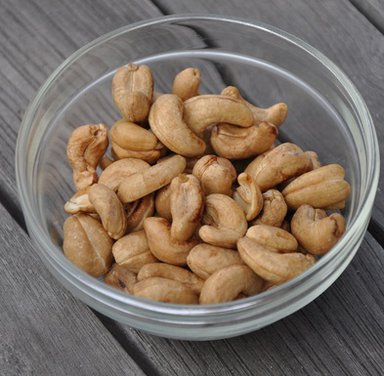
There are many recipes for homemade roasted nuts
Nuts are a great choice for a quick, nutritious snack.  They provide many nutrients like minerals, fiber, protein, and essential fatty acids (think good, unsaturated fat).  Yet- some nuts are more nutritious than others- providing more bang for you buck, so to speak (more nutrients per calorie or per gram of fat).

But- always keep in mind that high fat products are high in calories!!

When snacking on nuts- take into account calories, protein, fiber and minerals.  You can use the chart below to compare:
1) similar calorie content (ex. walnuts give you more than twice the protein that pecans do for the same calories)
or
2) similar protein content (ex. walnuts have less calories and fat compared to the macadamia nut for the same amount of protein)

Nutritional composition of 1 cup of various nut varieties- 1 serving is usually 1/4 cup*

*Peanuts are not truly a nut- they are considered a legume.  But, for our purposes- they are included in this.

Nuts are one way of lowering risk of heart disease by providing monounsaturated fats
The key to nutritionally dense foods is portion control.  A quick/handy measure of a serving of nuts is the amount that fit (in a single layer) on the palm of your hand.

Take home message: 
-Choose your nuts wisely as some  may be much higher in fat or calories than another.
-Nuts should be MINDFULLY eaten (not straight out of the can!)- measure out a portion because, although nutritious, these are very high in fat and calories.

For more nut (or any!) comparisons- look to the USDA food composition website!

Source for table:
Murano, Peter S. "Chapter 2- Food Categories and Composition." Understanding Food Science and Technology. Belmont, CA: Thomson/Wadsworth, 2003. p35. Print.

Tuesday, February 7

What sports drink should I buy?


sports drinks are a $7.5 billion industry!
The goal of a sports drink is to keep athletes hydrated and fueled during games, training, or any physical activity.  These beverages are now formulated to be consumed before, during, and after physical exertion.  Because there are so many drinks available for purchase, it's hard to know which one to get, for what purpose, and when to drink them!! 

In general, a sports drink contains water, a source of electrolytes (salt, minerals, etc.) and a source of carbohydrates (sugar).  And, each drink has a special formula designed for a specific purpose- whether it's for hydration or recovery.  Originally, the ratio of the water:carbohydrates:electrolytes was supposed to be the same/similar to sweat, with the idea that as you drink your sports drink, you are consuming the same balance of electrolytes in your drink as those which leaving your system in sweat (perfect recovery- your body doesn't get dehydrated nor does it get hyponatremiac (meaning it has too little salt- also called "water intoxicated"). 

But- there are really 3 different types of sports drinks (isotonic, hypertonic, and hypotonic), and they each play a different role in the body's hydration and recovery process.

hypotonic sports drinks are helpful for hydration
A hypotonic sports drink is one that has less electrolytes than your own body fluids.  Water moves by osmosis and goes towards the area with more concentration (to keep your body in homeostasis or balanced).  So, when you drink something that is hypotonic (less concentrated) the water in the drink goes into your cells (which are more concentrated), and your body is most efficiently hydrated.  Essentially, hydration occurs almost simultaneously as you drink. Hypotonic drinks are best and most effective when consumed before an event.  The best example is water but watered-down sports drinks work, or anything "light" like Gatorade G2, Powerade Zero.
isotonic sports drinks are good to replenish and recover
An isotonic sports drink is one that contains fluid and up to 8% of carbs (ideally glucose) and electrolytes.  This is a similar concentration of water, sugar, and salt in your body which means that they replenish anything that was lost in sweat.  The water from the drinks is absorbed well, but when you drink these isotonic drinks you also provide important electrolytes (necessary for all body functions) and carbohydrates (an important source of energy) which help you maintain energy levels throughout the activity.  These are best to be used during and after an event.  Gatorade, Powerade, Accelerade, most commercially available sports drinks,  etc are examples 
hypertonic solutions
A hypertonic sports drink then is one that has more carbs and electrolytes than your body. The increased particle concentration is essential for athletes to replenish glycogen stores; however, they are absorbed the slowest (think- opposite of hypotonic). These are most often used as energy supplements after heavy and intense exercise.  Examples of these are the drinks that say high carb/high energy/high calorie, "endurance," "performance," or plain fruit juices, etc.

So why do I care what drink I drink and when?

Sunday, December 18

why did I eat that?

It's getting dark at 4:30 these days, and I have found myself looking to eat dinner much earlier.  It's not that I'm actually hungry- most times I eat lunch around 1pm and eat a snack around 4pm.  So, why do I feel hungry?  Why do I want to eat dinner just after my snack?

We eat for many reasons.  Food is really just fuel for the body.  We eat because we have used up this fuel, and our body needs to have more.  But, in our society, food tends to be much more than simple fuel.  Food is social; food is emotional; food is yummy.  A problem arises when food becomes more emotional then physiological.

Some of the major contributors to why we decide to eat are know as external cues.  The external cue theory basically says that we eat because of external cues to our brain like:
  • the smell of food (hunger you feel when you smell fresh bread)
  • the time of day (you don't feel hungry until you look at the time and notice it's noon.  All the sudden you get hungry)
  • the routine that we are in (dessert after dinner; popcorn at a movie)
  • Are you hungry for that popcorn or is it habit?
  • the social environment (everyone is eating now- so I must eat now, too)
rather than internal cues such as: true hunger or low blood sugar.  I know that I fall into this trap of thinking that I'm hungry when I'm not truly hungry; it happens to everyone.

Sunday, November 20

stuff the turkey- not yourself!!

Need help decorating?
The holidays are a time for family and friends... and of course... FOOD.  It's okay to try things and indulge a little bit.  But, as is the theme for most of these posts- keep on track with portion control.  I found this helpful visual guide to help with the overindulgence that often accompanies these holiday meals!!

Pick and choose what you want to eat and what adds up to a healthy dinner plate.  You can select foods that you want to eat... so if you don't like pumpkin pie, maybe you want an extra serving of something else- it's up to you.

Some tips:
  • Serve yourself fruits and vegetables first.  Fill at least half of your plate with them.
  • Then serve yourself the protein. (Often this is served first, which can lead to overestimating the portion you want!!)
  • Measure any sauces or gravy that you add to your food.  The calories and fat from these can quickly add up!!
UT MD Anderson experts share portion control

Keep in mind:
  • Lose the clean plate mentality.  You don't need to eat your whole plate before you finish the meal.  If you are full, stop eating.
  • Eat slowly.  Your brain has a lag time between being full and feeling full
  • Don't feel the need to try everything.  Sometimes we feel the need to make people "feel good" by trying their dessert or side dish.  Don't feel you need to do this- eat what you want to stay on track!
  • Remember to drink plenty of water during the holidays.  Sometimes we mistake thirst for hunger. 
  • Remember to build exercise into your day.  If you are with your family, make it a group activity.  Walk in the park, run with the dog, etc.  This will make you feel good about yourself and jumpstart your metabolism for the day.
  • Lastly, don't skip meals or show up to dinner starving. You will have a tendency to overeat on the bread or appetizers served (which are often high in fat and calories).

Wednesday, November 9

comfort food with a twist!

Macaroni and cheese is one of my favorite comfort foods.  I don't eat it often because it is filled with... cheese... and be close to 1,000 calories and 40g of fat per serving!!

Last weekend, I tried a new recipe from Cooking Light that I highly recommend!  It uses butternut squash as that base which gives the cheese sauce a thick, creamy aspect without the added fat.  It also adds fat free Greek yogurt to give the sauce a slight tangy taste! Yum!

Butternut squash is a great vegetable- it's filled with vitamin A and C, naturally low in calories, and has no fat!!  I used a mix of part-skim cheddar and mozzarella cheese instead of the Gruyere and Parmesan! (That switch is up to you!)  This came out great- and because I substituted part-skim cheese for the suggested cheese, the added saturated fat and caloric content was significantly reduced!

Monday, November 7

Tis the season... for your sweet tooth

The New York Times has many indulgent recipes
It's here.  Holiday season.  We now have the Starbucks red cups (yayyyy!!), crowds making crossing 5th Avenue nearly impossible, tourists asking where Rockefeller Center is, and the release of Justin Beiber's Christmas Album.

I love this time of year.  It just smells good.  The chestnuts roasting outside, the cinnamon in drinks, the nutmeg in pies, the warm pumpkin glazes poured over pancakes, baked apple crisps... 

As great as the holidays are- this time of year can be treacherous for people's diets.  (Who can resist we have temptations from October 31 through December 31!!!).

Delicious blueberry pie can have close to 400 calories!
This time of year creates havoc on people's diets- from holiday parties and social events, where people eat mindlessly.  Having, just a piece or two of everything adds up!!  Cakes on average have 225 calories and 10 grams of fat per slice!  Cookies are not really any better- ranging from 50- 500 calories per cookie.  (by the way- did you know that a jumbo cookie equals TEN appropriately sized cookies!!!)

Friday, November 4

diet myth #2: red meat is bad for you

Charcoal Cow Butchery Diagram

There is a big push for us to eat less meat, especially red meat.  There are some reasons why this is the recommendation, but not all red meat deserves a bad rap!

The Bad News: Red meat, in general, has more saturated fat than other more lean meats. In fact, red meat is the 2nd biggest contributor to saturated fat in the American diet (behind cheese!).  Saturated fat leads to many health problems, including cardiovascular disease. There have also been studies that correlate people who eat more red meat in their diet to higher risks of both disease and cancer (although this has not been scientifically proven, yet). 

nutrient rich beef
The Good News: Red meat has a ton of nutritional benefits.  For starters, it's a complete protein (which means it contains all of the essential amino acids your body needs).  Additionally, because they are from an animal source, many of the vitamins and minerals obtained by eating red meat are absorbed more easily than their vegetable counterparts. 

Wednesday, October 19

too much of a good thing?... even if it's vegetables

Check out this Root Vegetable Gratin
We all know that vegetables are great for you.  They are a great source of vitamins, minerals, phytochemicals (small biologically active compounds), etc.  With few exceptions, unprocessed (not breaded and fried!) vegetables are naturally low in calories, cholesterol, sodium, and fat! They are not a good source of protein, but they often serve as an excellent complement to it in meals.

Vegetables, however, do contribute to calorie intake, and some vegetables are more calorically dense than others.  These calories can quickly add up.  When choosing vegetables, you must be aware of differences between those that are starchy and those that are non-starchy.

Thursday, October 13

good v. bad fat


fat marbling in this Kobe beef is an example of visible fat
Fat is confusing.  There are good fats, bad fats, soft fats, hard fats, visible fats and fats we can't see (...sneaky fats?).  

Fats are useful in many ways:
  • Fats are the body’s chief storage form of energy
  • It pads internal organs
  • It insulates the body against temperature extremes
  • It is the major material for cell membranes (phospholipids)
  • Essential nutrients stored in fat (...remember the fat-soluble vitamins)
 
Fats are useful in food because it gives enticing aromas and flavors, and it leads to tenderness in meats and baked goods! (yum!)  The problem with fat is that it is extremely high in calories and can "pack" well.  Fat has 9 cal/g as compared with proteins and carbs that have only 4 cal/g, and the body has unlimited storage capabilities for fat  (unlike protein and carbs!).